How to Write a Letter: Format, Examples & 5 Easy Steps
Plan the message, choose the right format, and turn your main point into a letter that feels clear, appropriate, and human.

The short answer
To write a letter, decide what you want the reader to know or do, choose a formal or personal format, open with an appropriate greeting, explain one main idea per paragraph, and finish with a clear next step and matching sign-off. Add names, dates, addresses, and evidence only when they help the reader act. Then read the letter once for meaning and once for mistakes before sending it.
How to Write a Letter in 5 Steps
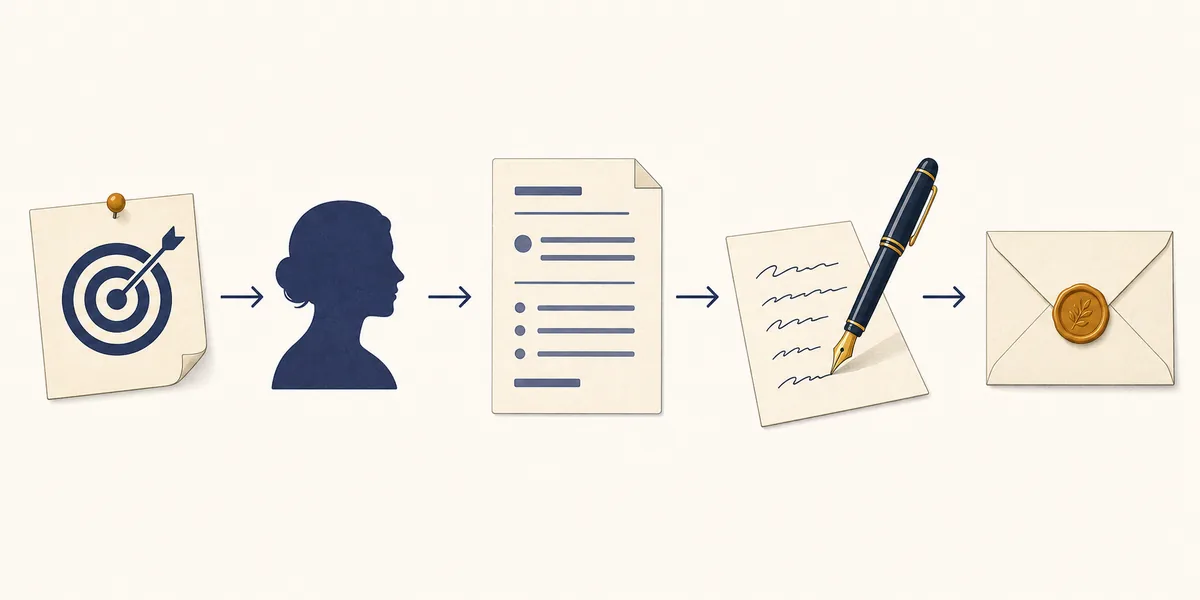
Good letter writing is less about impressive language and more about making the reader's job easy. Before drafting, reduce the message to one purpose and one desired result. These five steps work for a mailed letter, a PDF attachment, or a message that uses letter-style structure.
- Define the purpose
Write one sentence that begins, ‘After reading this, I want the recipient to…’ Your answer might be understand an update, approve a request, correct a problem, remember a shared moment, or reply by a certain date.
- Identify the reader and tone
Consider your relationship, the seriousness of the subject, and whether the letter may become a record. Use a professional tone for organizations, unfamiliar recipients, complaints, and formal requests; use a warmer voice for friends and family.
- Choose the format
A formal letter normally needs contact details, a date, the recipient's information, a salutation, focused paragraphs, a sign-off, and a signature. A personal letter can omit most address details and follow a more conversational rhythm.
- Draft from point to support to action
State why you are writing early. Add the facts, context, or personal details the reader needs. End the body by saying what happens next—reply, confirm, meet, keep in touch, or simply understand how you feel.
- Revise before sending
Check every name, date, amount, attachment, and claim. Remove repetition, replace vague phrases with specifics, and read the opening and closing together to make sure the tone stays consistent.
Letter Writing Format: Formal vs. Personal
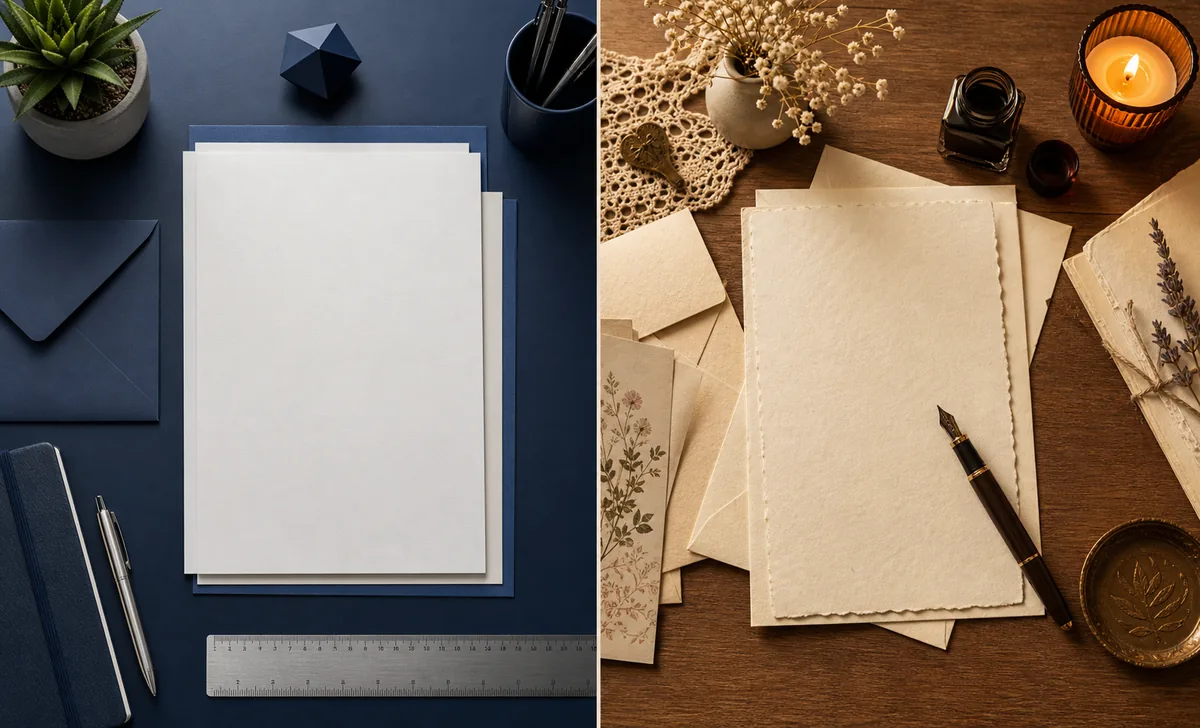
The right format signals how the reader should interpret the message. Formal letters make details easy to verify and usually use block format, with every line aligned left. Personal letters trade some structure for warmth. Local postal and business conventions vary, so follow an employer, school, court, or government template when one is supplied.
| Part | Formal letter | Personal letter |
|---|---|---|
| Contact details | Sender and recipient names, addresses, and useful contact information | Usually omitted unless the envelope or context requires them |
| Date | Write the full date near the top | Recommended, especially for a keepsake |
| Greeting | Use a name, title, or role appropriate to the recipient | Use the name or affectionate greeting you normally use |
| Body | Short paragraphs: purpose, supporting details, requested action | Flexible paragraphs with news, memories, questions, and feelings |
| Closing | Match the level of formality: Sincerely, Regards, Respectfully | Match the relationship: Warmly, With love, Take care |
| Signature | Leave space for a signature when printed, then show the typed name | A handwritten first name may be enough |
How to Start a Letter
The opening should help the reader answer two questions immediately: who is writing, and why? Choose a greeting the reader would recognize as respectful, then make the first sentence useful. Avoid spending a full paragraph apologizing for writing or building up to the point.
Formal letter openings
Use the recipient's name when you can verify it. A role such as ‘Dear Hiring Manager’ or ‘Dear Customer Support Team’ is clearer than guessing a title. After the greeting, state the subject or purpose in one direct sentence.
- Dear Ms. Rivera: I am writing to request a copy of the inspection report dated July 10, 2026.
- Dear Admissions Committee: I am writing to provide additional context for my application.
- Dear Customer Support Team: I am contacting you about order 18452, which arrived with a damaged component.
Personal letter openings
A personal letter can begin with a shared moment, a genuine question, or the reason the person came to mind. Write as you speak to that person, but give the opening enough context that it still makes sense months or years later.
- Dear Maya, I thought of you when I passed the little bookstore where we used to meet.
- Hi Grandpa, I wanted to tell you what happened on my first day at the new job.
- Dear Sam, thank you for staying late to help me prepare for the presentation.
How to Write a Clear Letter Body
A strong body has an easy-to-follow order. The first paragraph states the purpose. The middle supplies only the context that changes the reader's understanding. The final paragraph names the desired action or leaves the reader with the central feeling.
Paragraph 1: state the point
Give the reader the reason for the letter without forcing them to infer it. For a request, name the request. For thanks, name the specific action. For a personal update, introduce the event or thought you want to share.
Paragraph 2: add useful support
Use dates, examples, order numbers, achievements, memories, or short explanations. Group related facts together. If the situation is emotional or disputed, describe observable events before giving your interpretation.
Final paragraph: make the next step clear
Ask for a reply by a realistic date, name the document you attached, offer a way to contact you, suggest a future plan, or close the emotional thread. A reader should never have to guess whether you expect action.
Body checklist
- One main idea per paragraph
- Concrete names and dates instead of vague references
- Enough context for a reader who was not present
- A respectful tone even when the message is firm
- A specific request or natural emotional conclusion
How to End a Letter
The final sentence completes the message; the sign-off closes the relationship. Do not introduce a new complaint or major fact in the last line. Summarize the request, show appreciation without overdoing it, or point toward the next contact. Then choose a sign-off that matches the greeting and the reader.
| Tone | Closing | Best use |
|---|---|---|
| Professional | Sincerely, / Regards, | Most workplace, school, and service correspondence |
| Respectful and formal | Respectfully, | Officials, sensitive requests, or clear hierarchy |
| Warm professional | Best wishes, / Warm regards, | Known colleagues, mentors, and community contacts |
| Friendly | Take care, / Talk soon, | Friends and familiar contacts |
| Affectionate | With love, / Love, | Family, partners, and close friends |
Two Complete Letter Examples
Use these as structures, not scripts. Replace every bracketed detail and change the wording until it sounds like you. The formal example moves from record to request; the personal example moves from shared memory to present connection.
Formal request letter example
July 24, 2026
Jordan Lee, Facilities Manager — Northview Community Center
Subject: Meeting Room B request for August 13
Dear Jordan Lee:
I am writing on behalf of the Oak Street Reading Group to request use of Meeting Room B on Thursday, August 13, from 6:00 to 7:30 p.m.
Our group expects 12 attendees and needs only the tables, chairs, and whiteboard already in the room. We will follow the center's cleanup policy and leave the space in its original condition.
Please let me know by August 3 whether the room is available and whether you need a completed reservation form. I can be reached at [email protected].
Thank you for considering our request.
Sincerely, — Alex Morgan
Personal letter example
Dear Nina,
I found the photo from our rainy weekend in Portland—the one where we are both holding broken umbrellas—and it made me laugh all over again.
Life has been busy since the move, but I am finally settling into a routine. The new apartment has a tiny balcony, and I have somehow kept three basil plants alive. I think you would approve.
How is your pottery class going? Send me a picture of the blue bowl when it is finished. I would love to plan a long call next weekend if you are free.
Take care, — Jamie
Review, Personalize, and Use AI Carefully
A draft is finished only when the facts and voice belong to you. Review on two passes: first for meaning, then for mechanics. Reading aloud exposes stiff phrases, missing context, and sentences that are too long.
- Verify spelling of names, titles, organizations, dates, amounts, addresses, and attachment names.
- Replace generic praise with one specific example or memory.
- Remove private or unnecessary details the recipient does not need.
- Check that the greeting, pronouns, body, and sign-off maintain one level of formality.
- For legal, employment, financial, medical, or disciplinary matters, have the final text reviewed by a qualified person when the stakes are high.
If a blank page is slowing you down, the free AI letter writer can create a structured first draft. Treat the output as editable material: confirm every claim, remove invented details, and rewrite anything that does not sound like you.
7 Letter-Writing Mistakes to Avoid
- Hiding the purpose — Put the reason for writing near the beginning, especially in formal letters.
- Choosing the wrong tone — Friendly does not mean careless, and formal does not require cold or inflated language.
- Adding every detail — Keep facts that help the reader understand, decide, or respond.
- Using generic language — One precise example is more convincing than several broad claims.
- Making a vague request — Name the action, document, amount, date, or reply you need.
- Forgetting attachments — Mention enclosures in the body and verify they are included before sending.
- Sending without a final read — Check the recipient line and opening after every edit; copied templates often preserve the wrong name.
Letter Writing FAQ
Helpful references
Ready to draft your letter?
Describe the recipient, purpose, tone, and details, then generate an editable first draft you can make your own.
Open the Free AI Letter Writer